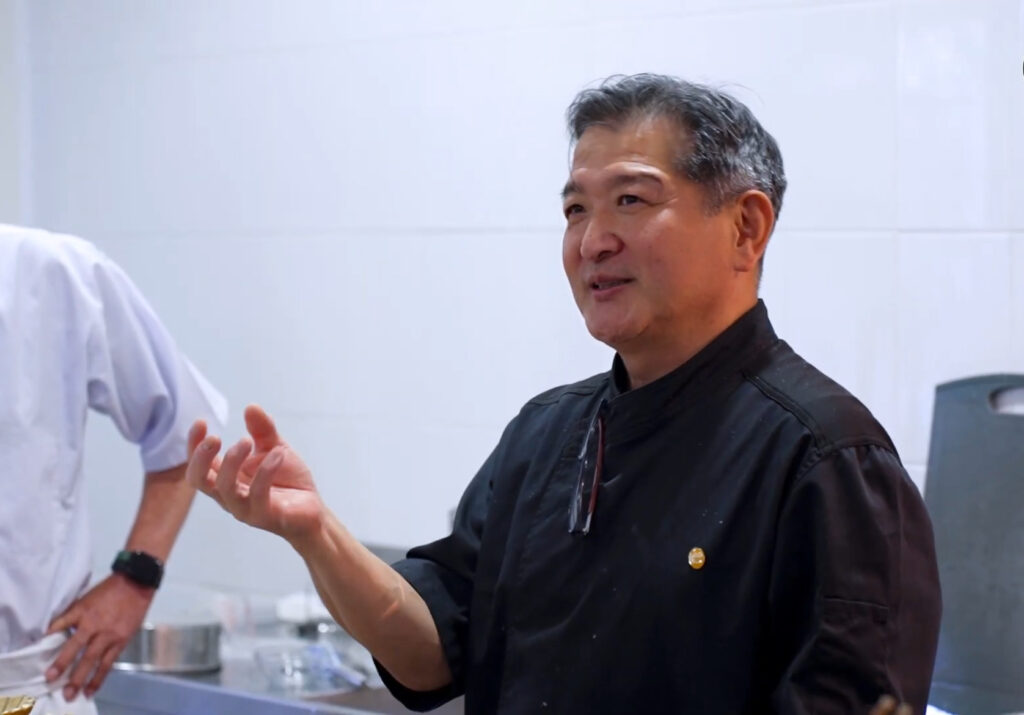
Chef’s Chat (Tabete mite Zadankai) | Behind the Scenes of Cooking” Interview with Hiro Kano
[Chef’s Chat (Tabete mite Zadankai) Chef Interview]
Next guest chef interview: Hiro Kano
The Washoku Oceania Network (WON) is proud to present the 20th Chef’s Chat.
Only one month to go!
This time around, we sat down with Hiro — our upcoming guest speaker — and had a proper yarn about his cooking roots, his food philosophy, and what it’s really like chasing the dream here in Australia.
“You forget a tasty joint quick-smart, but you never forget the place that looked after you.” That little gem (and plenty more) came up during the chat. Ended up being a bloody ripper of a conversation.
■ Interview kicks off
―― G’day Hiro, cheers for coming along today. Look, we’re just keen to have a relaxed yarn if that’s alright with you. We’ve got heaps we wanna ask, so let’s keep it nice and easy — no worries? Fire away whenever you’re ready.
1. What got you into cooking in the first place?
I actually started out as a restaurant manager, working front-of-house. So I was right there on the floor, copping customers’ reactions in real time — way before the chefs ever heard anything.
The thing I noticed pretty quick was how differently the place felt depending on the chef.
Some chefs were dead-set on doing things their way and nothing else. Others were happy to listen to what customers were actually saying and tweak things accordingly.
From the floor staff’s point of view, working with the second type — the ones who actually took feedback on board — made the whole vibe so much better. The place just felt more in harmony, easier to work in.
That’s when I started thinking:
“Hang on… if someone who really gets front-of-house jumps into the kitchen, maybe we could build an even better restaurant?”
So bit by bit I got more hands-on with the cooking side. And over the years I’d worked with some big-name chefs from fancy spots — but honestly, a lot of them were so stuck in their own ways that it actually threw the whole team out of whack.
That’s why, for me, the big question is always:
“How do you balance listening to what customers genuinely want… while still staying true to your own cooking philosophy?”
That balance is everything.
2. Was there a real turning point in your career?
It’s kind of tied to what I just said, really — it’s all the same thread.
Back when I was younger, heaps of chefs were the yelling, angry type (laughs). Everything had to be their way, no discussion, no compromise. Didn’t matter what anyone else thought.
Even something as simple as salt levels — you’ll get people saying “too sweet”, “too salty”, all sorts. But some chefs just refuse to adjust to what the locals actually like, or the kind of crowd that comes to that particular place.
Then you get the other chefs — the ones who actually hear the feedback and tweak things. And mate, that difference goes straight to the bottom line. Sales, atmosphere, everything.
Because I’d spent so long on the floor, I kept thinking:
“The way we collect and understand customer opinions here — that’s gold. I reckon I could carry that straight into the kitchen one day.”
So the real turning point? It wasn’t even when I became a chef.
The seed was already there way before I ever picked up a knife properly.
That’s how it feels looking back anyway.
3. What do you always keep in mind when you’re creating a dish?
How can I get a smile out of them? That’s the main thing.
Of course technique matters, no question. But it’s not just about nailing the cook.
How much background story should I give this dish? Does it even need explaining?
Beyond using beautiful ingredients, is there anything clever I can add to make it more special?
I’m always turning those kinds of questions over in my head.
At the end of the day, if the customer’s not smiling… none of the rest really counts.
4. What makes a dish feel truly “you” / like your own style?
No additives, no artificial colours — just respecting natural ingredients.
That’s the one thing I’ll never compromise on.
Whether it’s a high-end place or a more casual, affordable spot, there are heaps of ways to create amazing food using only natural ingredients and seasonings. You don’t need preservatives or synthetic stuff.
When the food feels safe and clean, it directly affects the whole “vibe” of the restaurant.
Staff feel more relaxed and genuine smiles come naturally. That relaxed energy flows straight through to the customers.
They think, “This place feels safe and good,” and next thing you know — “We’re coming back.”
It’s that simple chain reaction.
5. What’s your main criteria when choosing ingredients?
Freshness, hands down.
For veggies, it’s all about seasonality.
Australia’s massive, so the seasons can shift depending on where you are, but I still try to go as local and seasonal as possible — paddock-to-plate whenever I can.
At the end of the day though, it boils down to one thing:
“Whatever is the absolute best quality ingredient available right now.”
That’s it.
6. Any special tricks when working with Australian ingredients?
When I was living up in Queensland, there was an abattoir pretty close by.
Rockhampton is known as the “Beef Capital” of Australia — seriously good cattle country.
Back then, the processing methods were a bit old-school, and you could tell the cattle were under a fair bit of stress.
Stress really affects the quality of the meat.
So these days, I’m super conscious of:
What kind of environment was the animal raised in?
How was it handled and processed?
I make a point of choosing suppliers and producers whose philosophy I trust. That’s what gives me real peace of mind and keeps things safe for everyone.
7. When blending traditional techniques with new ideas, what do you keep in mind?
These days, whether you’ve got mad skills or you’re just starting out, information is everywhere — YouTube, AI, all of it.
So what really matters now is whether you can think creatively.
Don’t overcomplicate it.
The most important question is:
“Am I actually enjoying this?”
If it’s fun for you, that enjoyment almost always translates into something delicious for other people later on.
8. What new technique or challenge have you been tackling lately?
Hand-rolled sushi (temaki).
9. What’s your go-to way of creating surprise or that “wow” moment?
Start with the basics:
No MSG, no preservatives, no artificial anything.
That foundation alone creates a sense of surprise and trust for a lot of people these days.
Once they realise everything is clean and natural, the emotional impact is already there — then the flavours just hit even harder.
10. Is there any technique you think is really useful or brilliant?
Slow cooking, for sure.
It’s fantastic from a nutrition standpoint, helps with shelf life, cuts down cooking time when you plan it right, and it’s a great way to tackle food waste too.
It’s an old-school technique, but there’s so much modern potential in it. I reckon we can keep rediscovering ways to make it work brilliantly today.
11. What’s the biggest joy in this job for you?
Whether there’s a smile or not.
Of course it’s awesome when people rave about the taste, but what really gets me is when the whole experience — the service, the vibe, everything — leaves them satisfied.
“Ya forget a tasty joint quick-smart, but ya never forget the place that looked after ya.”
I genuinely believe that. It’s spot on.
12. Were there any really tough times or challenges you’ve overcome?
Heaps of rough patches, mate — more than I can count.
But the thing that really matters is:
“Who believed in me when things were shit?”
When you’re struggling, it’s usually the mental stuff that hurts the most, not just the physical or money problems.
Having the right people around you — the ones who’ve got your back — that’s what carries you through.
Hands down, that’s been the biggest thing for me.
13. As a chef, what core values will you never compromise on?
I don’t have a massive long list, to be honest.
But at the bare minimum:
I’ll never serve anything past its use-by date, never do dodgy re-use or shortcuts like that. Low-level stuff is a hard no.
And I won’t get so obsessed with my own satisfaction that I ignore the customer’s.
Their happiness counts just as much as mine.
Those two things? Non-negotiable.
14. Any projects you’re keen to tackle in the future?
If I had to define it, it’d be: “What actually makes a place a proper ‘shop’ / restaurant?”
The goal is simple:
“A place where people walk out feeling happier than when they walked in.”
That’s my “Happy Project”.
Food memories fade pretty quick sometimes — six months and it’s gone.
But the feeling of
“That was fun”,
“That birthday celebration was ace”,
“Man, it just felt good being there”…
Those kinds of memories can stick around forever.
The food itself just needs to be consistently above average — that’s enough.
But what we absolutely have to avoid is anyone leaving feeling unsatisfied.
The real aim is a place where, overall, people walk away thinking:
“Yeah, I’m bloody glad I went there.”
That’s the project I’m chasing.
15. What core value do you think the future of food really needs?
Safety.
That’s it.
16. What would you say to young chefs or the next generation coming through?
First up: “Just get stuck in — practice beats theory every time!” (習うより慣れろ!)
Sure, honing your technique is important, but it’s not the whole game.
You’ve gotta figure out what kind of person you really are.
Are you the bright, bubbly type? Quiet and steady? High-energy or more laid-back?
Knowing yourself properly is what decides whether you’ll thrive in a particular kitchen or not.
Through things like this hand-roll sushi workshop, or any chance you get — take a proper look at your own direction.
That’s what I really want people to do.
17. Finally, any last words you’d like to share?
If right now you’re laser-focused on something — anything — that alone means you’ve got massive potential to grow.
Don’t hold back. Just go for it.
Kaiseki, ramen, onigiri, hand-rolled sushi — doesn’t matter what it is.
I didn’t even come from a cooking background, but I’ve got passion.
And nothing beats passion.
If there’s something you want to do, just smash it together, try it out. Feed people, taste it yourself, realise “nah, that didn’t quite work” — that’s fine.
You only find out by doing it.
Don’t overthink it. Just enjoy the ride.
■ Wrapping up the interview
―― Hiro, thanks so much for sharing so openly today.
(Hiro) No worries at all — actually talking it through was really enjoyable for me too. It helped me reconnect with my own starting point.
―― I’m even more excited for the next session now!
(Hiro) Same here. Can’t wait to sit around the table with everyone, share some food, and have a proper chat. Come along, try my hand-rolled sushi, eat it, and tell me what you reckon.
―― On the day, I really want everyone to experience Hiro’s way of seeing food firsthand.
(Hiro) Yeah, spot on. No pressure — just come as you are and have fun. That’s the best thing I could hope for.
―― Alright, we’ll keep prepping for the big day. Thanks again!
(Hiro) Cheers — see you all there!
■ Next Event Info (Chefs Only)
Chef’s Chat (Tabete mite Zadankai)
Date: Monday 2 February, 2:00 pm start (about 2-3 hours)
Theme: Hand-Rolled Sushi (Temaki)
Location: Dekura Studio, Chatswood
Fee: $50
※ If we get more applications than spots, we’ll run a ballot.
To apply, head to the NPO website and register as an individual member first (it’s free).
※ This session is chefs-only, but we’re planning one for the general public next time.
※ If you’re a journalist or interested in covering the event, please reach out directly.
⇒ washokuoceanianetwork@gmail.
Looking forward to seeing you there!