Learning from Nanakusa-gayu: How to Use and Tame Bitterness
On January 7, I prepared Nanakusa-gayu.
Nanakusa-gayu is a traditional Japanese rice porridge eaten on January 7, made with seven spring herbs. It is believed to promote good health, help the body recover after the New Year festivities, and ward off illness for the coming year.
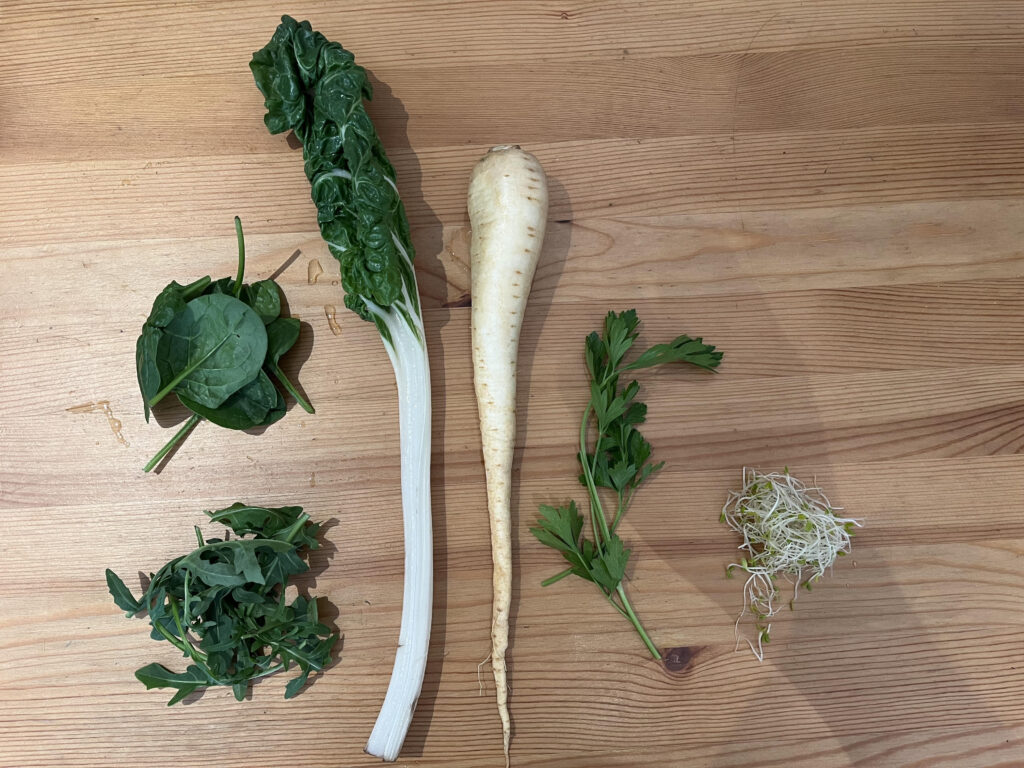
As I live in Australia, however, I didn’t use the traditional Japanese seven herbs. Instead, I used locally available greens and vegetables—an Australian-style version of Nanakusa-gayu.
While preparing it, I found myself reflecting deeply on a question that often goes unexamined:
What exactly is bitterness?
Not only bitterness, but also astringency, harshness, and what Japanese cooking broadly refers to as aku (impurities or unwanted compounds).
These are elements we deal with daily in cooking, often relying on intuition rather than clear understanding. I decided to take this opportunity to put those thoughts into words and record them.
What Are Bitterness, Astringency, and Harshness?
— Most of them are actually water-soluble —
Many of the bitter, astringent, and harsh components found in vegetables are water-soluble, meaning they dissolve in water.
This is why techniques such as soaking in water or boiling allow us to control them to some extent.
However, not everything can be simply “washed away.”
Some compounds dissolve more easily in oil, while others must be removed by binding them to different substances.
In professional kitchens, these are often lumped together under the term aku, but in reality, their properties differ greatly.
Types of Bitterness and How to Remove Them
Harshness (Egumi)
Oxalic acid – water-soluble
→ Boil thoroughly in plenty of water (e.g. spinach)
Astringency (Shibumi)
Polyphenols (tannins, etc.) – water-soluble
→ Soak in water or lightly acidified water (eggplant, burdock, lotus root)
Bitterness (Nigami)
Cucurbitacins, saponins, etc. – water-soluble
→ Salt and squeeze to draw out moisture (bitter melon, cucumber)
Strong “Aku”
Homogentisic acid, etc. – poorly soluble
→ Boil with rice bran or baking soda (bamboo shoots, bracken fern)
Why rice bran or baking soda?
Strong aku, such as that found in bamboo shoots or bracken, is trapped deep within the plant fibres and cannot be removed with water alone.
- Rice bran: Minerals such as calcium bind to and absorb the unwanted compounds
- Baking soda: Its alkalinity loosens plant fibres, allowing the compounds to escape more easily
Should Bitterness Be Removed or Preserved?
Bitterness is, biologically speaking, a warning sign of toxins.
Yet in small amounts, it adds:
- depth
- sharpness
- a sense of maturity
to a dish.
The key is not eliminating bitterness entirely, but deciding how much to leave, depending on the purpose of the dish.
Techniques to Suppress or “Kill” Bitterness
Using oil
Bitterness is perceived strongly when it directly stimulates taste receptors on the tongue.
When vegetables are stir-fried or deep-fried, the bitter compounds are coated in oil, making them harder to perceive.
This is one reason why goya champuru (Okinawan bitter melon stir-fry) is surprisingly easy to eat.
Using contrast
In this Nanakusa-gayu, I did not add sugar or acidity at all. However, in general, adding small amounts of:
- salt
- sugar
- acidity (vinegar or lemon)
causes the brain to prioritise those sensations, effectively masking bitterness.
Adding dairy
Proteins in milk or cream bind with bitter and astringent compounds, rounding out the flavour.
It’s the same principle as adding milk to coffee.
Techniques to Highlight and Preserve Bitterness
Short cooking times
Many bitter compounds are easily lost through heat and water.
By cooking just enough to keep a crisp texture, you can preserve aroma and pleasant bitterness.
Creating browning
Browning through the Maillard reaction produces a gentle, appealing bitterness.
This is why simply roasting vegetables often results in a more “adult” flavour.
Avoiding soaking
Vegetables such as chrysanthemum greens or rocket (arugula), where aroma and bitterness define their character, are best used with minimal washing and served raw or lightly dressed to retain their wildness.
Bitterness That Is Actually Dangerous
Not all bitterness can or should be controlled.
Solanine, found in potato sprouts and greened skin, is water-soluble but resistant to heat and clearly toxic.
This cannot be addressed through aku removal.
The only safe solution is to cut it away completely.
Nanakusa-gayu as the Perfect Lesson in Bitterness
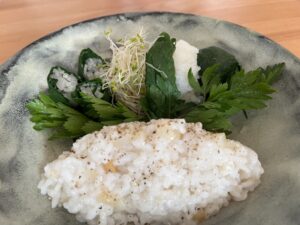
Note: Although rice porridge may sound firm, the ideal texture is just barely able to hold shape—very soft and almost slurry-like.
In this preparation, I separated some ingredients into leaves and stems. Stems have denser structures and release oxalic acid less readily, so I boiled the stems while steaming the leaves.
When adjusting bitterness, it is essential to first taste the ingredient raw, part by part (you do not need to swallow it). This reveals its condition at that moment and allows fine-tuning of boiling or steaming times.
What is more difficult is achieving balance and harmony when everything is eaten together. This comes either from experience or from tasting the finished dish, adjusting, and making it again.
One method for suppressing bitterness is the use of oil. In this case, I added a few drops of extra virgin olive oil at the end to balance the bitterness.
One deliberate choice was not to use umami.
I used neither soy sauce nor kombu. From a purely flavour-driven perspective, adding chicken stock, bonito flakes, or cheese would undoubtedly increase satisfaction and make the dish restaurant-ready.
However, this time I intentionally focused on natural bitterness and sweetness.
Although this dish is vegan and also aligns with shōjin ryōri (traditional Buddhist temple cuisine), I believe it fulfilled the original purpose of Nanakusa-gayu: promoting good health, recovery from fatigue, and overall vitality.
Balancing bitterness is challenging, but equally important are salt levels and serving temperature. There is a narrow temperature range where the dish works—neither too hot nor too cold.
Conclusion
Nanakusa-gayu is not only a dish of nutrition and symbolism, but also a hands-on lesson in how to handle bitterness, astringency, and harshness.
Do you remove it?
Do you keep it?
How much is acceptable?
Understanding bitterness raises the resolution of your cooking by one level.
And ultimately, that decision does not belong to a recipe, but to the cook’s senses and intention.
Once again, Nanakusa-gayu reminded me of that truth.