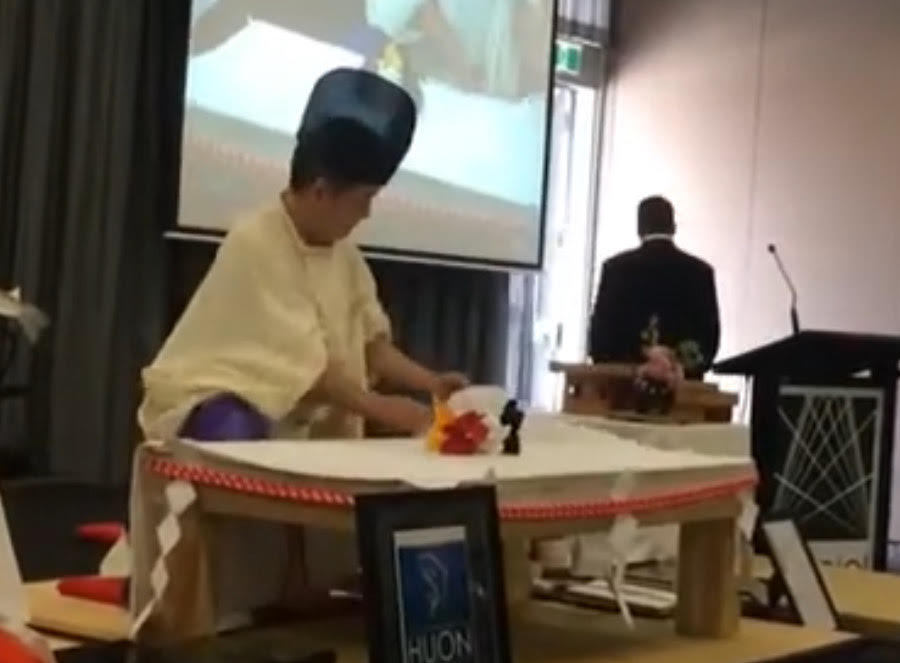
What is The Manaita-biraki まな板開き(包丁式)
Manaita-biraki
— A Ritual of Gratitude, Skill, and Respect for Life —
Every New Year, Japanese chefs begin their work not with cooking, but with prayer and ritual.
Manaita-biraki, literally meaning “opening the cutting board,” is a traditional ceremony marking the first use of knives and cutting boards of the year. Rooted in Shinto belief, it is an act of purification and renewal, symbolizing a fresh beginning for both the chef and the kitchen.
At the heart of this ceremony lies Hocho-shiki (the Knife Ceremony)—a ritual that dates back over 1,000 years to the Heian period.
During Hocho-shiki, a master chef wears ancient court robes and prepares a fish without ever touching it by hand. Using only a long ceremonial knife and a pair of metal chopsticks known as manabashi, the chef demonstrates refined technique, discipline, and reverence.
The act is not about efficiency or display—it is an offering to the deities, expressing gratitude for the life of the ingredients and praying for health, prosperity, and harmony in the coming year.
This ritual reflects a fundamental philosophy of Japanese cuisine:
food is not merely consumed—it is received.
まな板開き(包丁式)
命と向き合う、日本料理の原点
日本の料理人にとって、新年の始まりは「調理」
まず行われるのは、祈りと儀式です。
まな板開きとは、
その中心となるのが、平安時代から千年以上続く「包丁式(
古装束を身にまとった料理人が、食材に一切手を触れることなく、
そこにあるのは、命をいただくことへの畏敬、
無病息災、五穀豊穣、そして一年の厨房の安全を祈るこの儀式は、
日本料理が「命と向き合う文化」であることを、静かに、
Why We Share This Tradition
As an NPO dedicated to cultural exchange and education, we believe that rituals like Manaita-biraki are not relics of the past, but living philosophies.
They remind us that technique without respect is incomplete, and that cooking can be a bridge between nature, culture, and people—across borders.